Published on June 12, 2025 - (Updated on April 26, 2026)
In the world of commercial transportation, owning a semi truck is often more than just a business move—it’s a pivotal investment. Whether you’re launching your first freight operation or expanding an existing fleet, buying a semi truck for commercial use requires careful consideration. With so many models, financing options, and regulations to navigate, the process can feel overwhelming. But don’t worry—we’ve laid out a comprehensive guide to help you make the right choice.
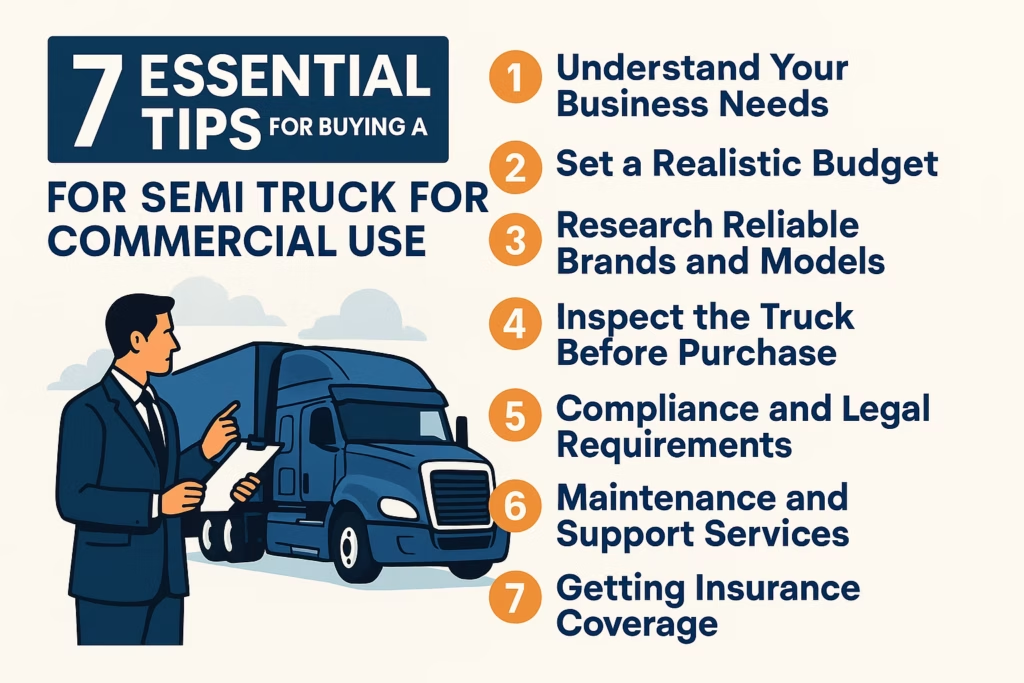
Before you start scanning listings or walking into dealerships, it’s crucial to define exactly what your business demands. A long-haul logistics company will need something very different than a local delivery service.
Each option has its perks and pitfalls.
Leasing a semi truck is attractive for businesses wanting flexibility without a long-term financial burden. It also offers newer models and easier upgrades. However, buying builds equity and may offer more freedom in terms of customization and usage. Evaluate your long-term goals and cash flow when deciding.
While the sticker price gets most of the attention, owning a semi truck involves many ongoing expenses. When buying a semi truck for commercial use, hidden costs can add up fast.
Banks, credit unions, and dealer-backed financing are popular choices. Shop around for competitive rates and flexible repayment terms. Some financial institutions offer special programs for first-time buyers or those with good credit histories.
Don’t overlook these:
Being realistic about these costs helps you avoid unpleasant surprises.
Not all trucks are built the same. Focus on durability, parts availability, and overall cost of ownership.
| Brand | Known For | Best For |
|---|---|---|
| Freightliner | Fuel efficiency and affordability | Long-haul routes |
| Peterbilt | Rugged construction and comfort | Heavy loads and long trips |
| Volvo | Driver comfort and tech integration | Fleet-based logistics companies |
| Kenworth | Power and reliability | Mixed use and terrain variability |
A thorough inspection can save you thousands. Consider scheduling semi‑truck pre‑purchase inspections by TestDriveTech—they provide detailed diagnostics, over 250 photos and video, fluid sampling, and expert insight.
A key step in buying a semi truck for commercial use is getting a certified pre-purchase inspection.
Hiring a trusted mechanic to evaluate a used truck is essential. They’ll check for wear and tear, underlying mechanical issues, and even signs of odometer fraud. TestDriveTech employs advanced diagnostic technology—ECM scans, emissions checks, and electronic system evaluation—ensuring you fully understand the vehicle’s mechanical health and verification of hours and mileage before purchase.
Your truck must meet federal and state guidelines. Compliance is non-negotiable when you’re buying a semi truck for commercial use.
Many states have strict regulations. Make sure the truck meets EPA standards or you could face fines or bans.
Choose a truck that can be serviced easily in your operating area. Access to parts, qualified mechanics, and warranty coverage can make a huge difference in uptime and profitability.
Commercial trucking insurance varies depending on your routes, cargo, and truck type. Look into:
Get multiple quotes and ensure your insurer understands your exact operation.
Online marketplaces and auctions like Ritchie Bros. and Commercial Truck Trader also offer wide selections.
Here’s your must-have list before signing the papers:
1. Is it better to buy or lease a semi truck for commercial use?
It depends on your budget, long-term goals, and how much flexibility you need. Leasing is flexible, while buying builds ownership.
2. How much does a new semi truck cost?
Expect prices between $130,000 to $200,000, depending on the brand, model, and features.
3. What should I check when buying a used semi truck?
Check engine condition, mileage, maintenance records, and get a third-party inspection.
4. Can I get financing with bad credit?
Yes, some lenders specialize in commercial truck loans for poor credit, but interest rates may be higher.
5. What kind of insurance do I need?
You’ll need liability, cargo, and physical damage insurance at a minimum.
6. Do I need a special license to drive a semi truck?
Yes, a Commercial Driver’s License (CDL) is required in the U.S.
Buying a semi truck for commercial use isn’t just about picking the flashiest model—it’s about making a smart, informed investment. By understanding your business needs, setting a budget, doing your research, and inspecting thoroughly, you set yourself up for long-term success on the road.

Steven is the CEO of Test Drive Technologies based in St. Louis. When he's not busy inspecting and appraising vehicles, he spends time with his family.

Don't risk costly repairs or hidden damage. Know the truth before you buy with certified mobile vehicle inspections and appraisals. Inspecting commercial fleets, RVs, motorhomes, used, luxury and classic cars.
